
 Bookbug is a digital book club run by Maple. Every month, a new book is voted on to be read and reviewed by members.
reviews

Not to Disturb
Muriel Spark
★★☆☆☆ (2/5)
1/27/26 → 2/3/26
Muriel Spark
★★☆☆☆ (2/5)
1/27/26 → 2/3/26
Not to Disturb is a slightly absurd novella following the unflappable butler Lister and his preparations following the deaths of his employers, the Baron and Baroness Klopstock, as he ensures the financial wellbeing of himself and his fellow servants. The only issue is that the Baron and Baroness are still very much alive, but Lister moves as if they are already dead.
This is January's Bookbug pick and since it was so short, I decided to read it on a whim. Unfortunately, I didn't really like this. I understand that this book is satirical and it was poking fun at the upper class, as well as the general degeneracy of the wealthy, what with prim and proper Baron Klopstock being a porn addict and maybe filming pornos with his servants and also requesting the services of a 'masseuse' and her male cross-dressing companion, as well as the probably incestuous marriage between Heloise and Gustav (not to mention the incestuous relationship between Lister and Eleanor), but the satire and humor really didn't work with me. I found the characters to be insufferable and thought the treatment of women, particularly the licentious descriptions of Heloise, to be really gross. It felt like almost every man was a sex-obsessed boor. If you told me a man had written this, I would believe you. If each incident happened in isolation, I wouldn't think much of it, but one thing after the other is, for me, really distasteful. Before this, I was unfamiliar with Muriel Spark's works but if they're anything like this, I will happily skip them. Initially, I was pretty interested in the whole premise of the novel. Why was the butler acting as if his employers were destined to die? But, by the end, I found my patience had worn thin with how annoying the characters were. Perhaps back in the day it was written, the commentary was more insightful or biting, but for me, an American removed from the class issues specific to Britain, I found this novella to be rather stupid. (But idk, maybe that's a me issue. From skimming reviews by other Bookbug members, it seems like this novella was well-received, so I might just be the odd one out.)
This is January's Bookbug pick and since it was so short, I decided to read it on a whim. Unfortunately, I didn't really like this. I understand that this book is satirical and it was poking fun at the upper class, as well as the general degeneracy of the wealthy, what with prim and proper Baron Klopstock being a porn addict and maybe filming pornos with his servants and also requesting the services of a 'masseuse' and her male cross-dressing companion, as well as the probably incestuous marriage between Heloise and Gustav (not to mention the incestuous relationship between Lister and Eleanor), but the satire and humor really didn't work with me. I found the characters to be insufferable and thought the treatment of women, particularly the licentious descriptions of Heloise, to be really gross. It felt like almost every man was a sex-obsessed boor. If you told me a man had written this, I would believe you. If each incident happened in isolation, I wouldn't think much of it, but one thing after the other is, for me, really distasteful. Before this, I was unfamiliar with Muriel Spark's works but if they're anything like this, I will happily skip them. Initially, I was pretty interested in the whole premise of the novel. Why was the butler acting as if his employers were destined to die? But, by the end, I found my patience had worn thin with how annoying the characters were. Perhaps back in the day it was written, the commentary was more insightful or biting, but for me, an American removed from the class issues specific to Britain, I found this novella to be rather stupid. (But idk, maybe that's a me issue. From skimming reviews by other Bookbug members, it seems like this novella was well-received, so I might just be the odd one out.)
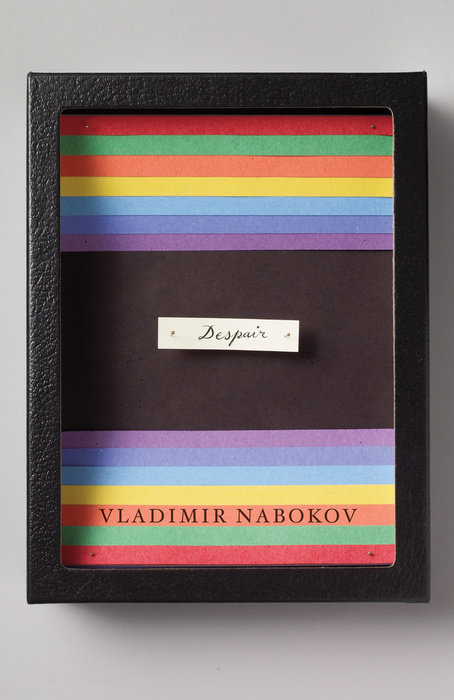
Despair
Vladimir Nabokov
★★★☆☆ (3/5)
2/24/25 → 3/3/25
Vladimir Nabokov
★★★☆☆ (3/5)
2/24/25 → 3/3/25
After randomly encountering a man who appears to be his doppelganger, Hermann Karlovich begins to plan the perfect crime, his own murder, in order to commit insurance fraud.
I have mixed feelings about this book. This is my first Nabokov, and I enjoyed his prose. However, I found most of the book to be tedious. While there are mentions here and there of Hermann's financial woes and him meeting his doppelganger, the first half of the book seems largely plotless. As the narrator, Hermann has a tendency to go on long-winded tangents, making the experience of reading the book much like wandering down a twisting forest path. I often found myself losing interest or thinking about something else and would have to force myself to focus on the text. The latter half is more interesting, if only because Hermann begins his scheme.
For me, the most interesting part of the book and its saving grace is the psychology of Hermann. He's established from the get-go as an unreliable narrator. At the start, he cheerily tells the reader that he sometimes lies or makes up stories, bringing into question everything he is narrating. He comes across as being narcissistic and grandiose while also being willfully oblivious to some things. For instance, it's heavily implied that his wife, Lydia, is cheating on him with her cousin, Ardalion, but Hermann's disdain for Ardalion as well as his belief that Lydia is a simple and silly woman blinds him to the nature of their relationship. He portrays himself as being charismatic, but the way characters interact with him suggests otherwise. When he was trying to convince his doppelganger to work for him, Hermann flat-out admitted he wasn't as eloquent as he hoped. Hermann's delusions form the basis of the book. They inform the way he interacts with the world and with the reader, making this book a fascinating character study on someone who is truly delusional and yet is so certain in their delusions.
Side note, but I've never read Dostoevsky before. In this book, Nabokov makes several references to him. I didn't exactly understand them, but I found his snipes at Dostoevsky to be rather amusing. Nabokov seems a bit salty lol
"Thus, a reflected image, asserting itself, laid its claims. Not I sought a refuge in a foreign land, not I grew a beard, but Felix, my slayer. Ah, if I had known him well, for years of intimacy, I might even have found it amusing to take up new quarters in the soul I had inherited. I would have known every cranny in it; all the corridors of its past; I could have enjoyed the use of all its accommodations. But Felix's soul I had studied very cursorily, so that all I knew of it were the bare outlines of his personality, two or three chance traits."
I have mixed feelings about this book. This is my first Nabokov, and I enjoyed his prose. However, I found most of the book to be tedious. While there are mentions here and there of Hermann's financial woes and him meeting his doppelganger, the first half of the book seems largely plotless. As the narrator, Hermann has a tendency to go on long-winded tangents, making the experience of reading the book much like wandering down a twisting forest path. I often found myself losing interest or thinking about something else and would have to force myself to focus on the text. The latter half is more interesting, if only because Hermann begins his scheme.
For me, the most interesting part of the book and its saving grace is the psychology of Hermann. He's established from the get-go as an unreliable narrator. At the start, he cheerily tells the reader that he sometimes lies or makes up stories, bringing into question everything he is narrating. He comes across as being narcissistic and grandiose while also being willfully oblivious to some things. For instance, it's heavily implied that his wife, Lydia, is cheating on him with her cousin, Ardalion, but Hermann's disdain for Ardalion as well as his belief that Lydia is a simple and silly woman blinds him to the nature of their relationship. He portrays himself as being charismatic, but the way characters interact with him suggests otherwise. When he was trying to convince his doppelganger to work for him, Hermann flat-out admitted he wasn't as eloquent as he hoped. Hermann's delusions form the basis of the book. They inform the way he interacts with the world and with the reader, making this book a fascinating character study on someone who is truly delusional and yet is so certain in their delusions.
Side note, but I've never read Dostoevsky before. In this book, Nabokov makes several references to him. I didn't exactly understand them, but I found his snipes at Dostoevsky to be rather amusing. Nabokov seems a bit salty lol
Random Quotes:
"The ecstatic love of a young writer for the old writer he will be some day is ambition in its most laudable form.""Thus, a reflected image, asserting itself, laid its claims. Not I sought a refuge in a foreign land, not I grew a beard, but Felix, my slayer. Ah, if I had known him well, for years of intimacy, I might even have found it amusing to take up new quarters in the soul I had inherited. I would have known every cranny in it; all the corridors of its past; I could have enjoyed the use of all its accommodations. But Felix's soul I had studied very cursorily, so that all I knew of it were the bare outlines of his personality, two or three chance traits."